Post 5
-
Jayden Pooran – Discussion Post 5
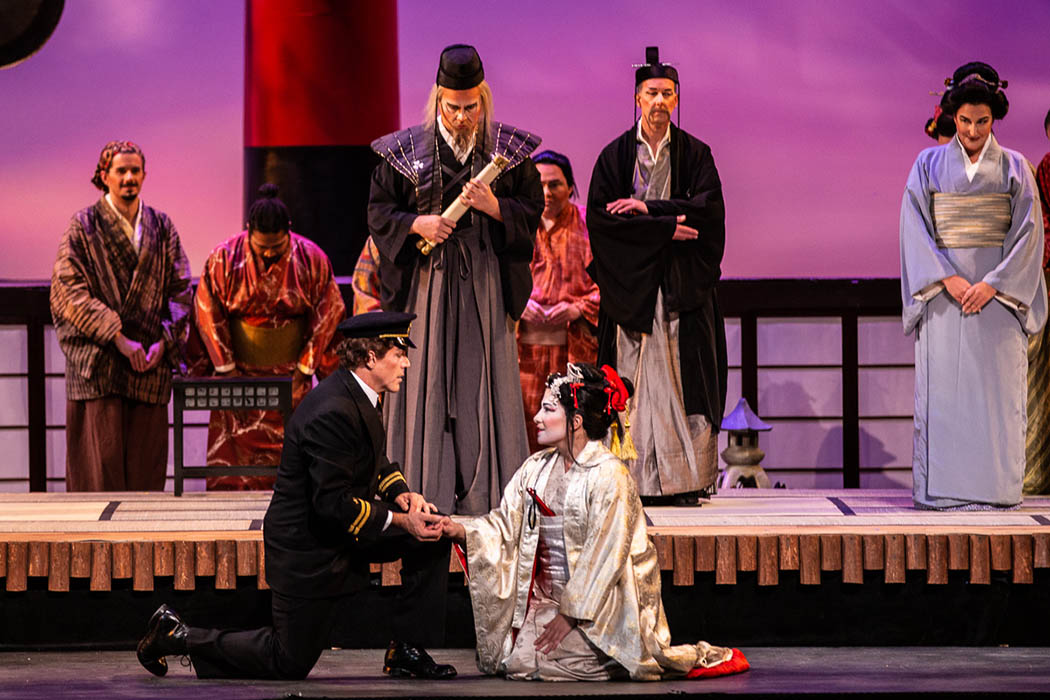
Referencing Stuart Hall’s essay, Puccini’s iconic opera Madama Butterfly presents the Orient (the East) in binary opposition to the Occident (the West) through depicting cultural stereotypes. Cio-Cio-San’s loyalty to Pinkerton is clear as she is devoted to him. She incorporates feminine stereotypes into her behavior which can be seen as Eastern femininity. Pinkerton disregards her and sees their marriage as temporary and not a true commitment which shows his Western ways. It seems like the West exploited the East. The song “America Forever” in Madama Butterfly engages what Hall identifies as a stereotype of the exoticized “Other” because it captures the perceived notion of Western dominance and entitlement over the…
-
Discussion Post #5 – Spectacle of the Other in Madama Butterfly
Stuart Hall’s chapter. The Spectacle of the Other, gives the readers a more clear understanding of representation in the Opera Madama Butterfly. In this chapter, Hall states “But this only served to confirm the fantasy among whites of their ungovernable and their excessive sexual nature”. Hall said this in reference to the power White Americans had over Black slaves, however, this same power can be seen in Madama Butterfly. In act two, we see Pinkerton’s excessive sexual nature when he writes a letter to Butterfly explaining that he has taken another wife in America. This goes along with Hall’s reading that White’s have an excessive sexual nature. Later, in act…
-
Discussion Post #5 – Mindi Tuchman
-
Isabella Yakutilov – Discussion Post 5
In reference to Stuart Hall’s essay “The Spectacle of the Other,” Puccini’s intricate opera Madama Butterfly stages the image of the Orient (the East) in binary opposition to the Occident (the West) through the emphasis of cultural stereotypes. These differences in the cultural stereotypes are illustrated in the duet “Love Me, Please” between Pinkerton and Cio-Cio-San. Cio-Cio-San shows the stereotype of a naive, heartfelt Eastern woman who is deeply intrigued by Western culture. Pinterton on the other hand shows Western dominance and even entitlement which again highlights the significant contacts that Hall mentioned and they are evident here in power and norms between the two different cultures of Pinkerton and…
-
Lesley Lo’s Discussion Post 5
Puccini’s opera Madama Butterfly painted a stereotypical view of the Orient (the East), as the main theme of the opera was Cio-Cio-San begging for Pinkerton’s loyalty and love. In “The Spectacle of the Other,” Hall stated some harmful stereotypes that painted people from the East as submissive, childlike, innocent, and exotic. I focused on the music of the opera. Puccini tried to include some authentic melodies from Japan, but he used music that seemed overly “pure” and innocent by employing only whole tone scales (scales that are easy to layer with generally pleasing sounds, devoid of half steps, etc.), thus infantilizing Cio-Cio-San. The introduction of the opera itself shrouded Cio-Cio-San…
-
Lorenzo Guerra
Using Stuart Hall’s essay “The Spectacle of the Other” it’s critical that we analyze the binary opposition of the East and West in Puccini’s canonical opera Madama Butterfly. Hall argues that these binary oppositions construct a narrative where the West is seen as the norm and the East as the exotic ‘Other’. The opera takes place in Japan, which strikes a stark contrast between Western civilization and the Orient (the East). Madama Butterfly represents Eastern civilization through traditional Japanese attire, customs, and cultural demeanor, which is certainly different than characters like Pinkton who echo vibes of American assertiveness and cultural insensitivity. The scene I’m choosing is “Un bel di vedremo”…
-
Jayden Blumberg – Discussion Post 5
Stuart Hall’s essay, The Spectacle of the Other, discusses how a dominant group will represent another group through stereotypes. These stereotypes are often harmful and misleading to society as a whole. Puccini’s opera, Madama Butterfly, creates the image of the Orient in binary opposition to the Occident by portraying Eastern women as exotic and obedient. Puccini reinforces the idea that the West dominates the more passive East through characters like Cio-Cio San and Pinkerton. This power dynamic is seen when Cio-Cio San formally abandons her religion to comply with Pinkerton and get married. This was my first time seeing an opera and I was surprised by the extravagance of the…
-
Renee Li – Discussion Post 5
A scene from Madama Butterfly that represents the stereotype of the exoticized “Other” discussed by Stuart Hall is the “Un bel dì vedremo”. In this aria, Butterfly expressed her hope for Pinkerton to return to Japan and imagines the joy of their reunion. She is certain that he will come back to claim her as his wife. This scene depicts Butterfly as a naive, loyal and devoted woman whose life revolves around her Western lover. She is what the West fantasizes as the exoticized “Other”, and reinforces the stereotype of the East as submissive and inferior to the West. Seeing opera for the first time was really interesting but also…
-
Discussion Post 5: Orientalism in Madama Butterfly
In Giacomo Puccini’s Madama Butterfly, the opera stages an image of the Orient that reinforces differences between East and West. The character of Cio-Cio-San represents a stereotypical view of Asian women that Stuart Hall, through Edward Said’s theory of Orientalism, would describe as the “Other.” Cio-Cio-San’s portrayal aligns with the stereotype of the Eastern woman as submissive and devote, a figure who exists almost exclusively in relation to her Western lover, Lieutenant Pinkerton. This image is evident in the famous aria, “Un bel dì vedremo” where Cio-Cio-San expresses her unwavering belief that Pinkerton will return to her. Her faith and devotion illustrate the passive, patient figure that the West traditionally…
-
Finley Nguyen — Discussion Post #5
Stuart Hall’s essay “The Spectacle of the Other” examines the use of racial stereotypes in representation, the naturalization of racial differences, and the phenomenon of binary opposition. In Puccini’s opera Madama Butterfly, these concepts manifest themselves through the intentional representation of Madama Butterfly as stereotypically submissive, naive, and quick to fall in love with a foreigner, all while solidifying the idea that this is how Eastern women naturally are—especially with Pinkerton’s lack of seriousness toward Cio Cio San’s feelings. In Act I, when Pinkerton discusses the marriage with Sharpless, he objectifies Cio Cio San while disregarding any reasonable concerns, painting her as less valuable saying he’ll someday settle with a…