-
Finley Nguyen – My Home Front
https://vietnamwar.nyhistory.org/mural/index.html?version=warfront https://vietnamwar.nyhistory.org/mural/index.html?version=homefront Full resolution: https://drive.google.com/file/d/110dLlP2uMFjCal236S8u-00WFhk1l5K5/view?usp=sharing
You May Also Like
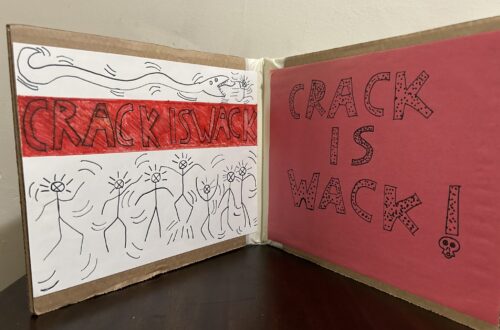
Jayden Blumberg- Crack is Wack Mural
-
Finley Nguyen – Discussion Post #6
Above two purple typewritten manifestos, a black and white photograph is displayed. The photo features a group of gender diverse people, all appearing quite young, perhaps 18-28 years old. The people in the back pose against a brick building with messages scrawled all over the entrance, the most visible one reading: “FIGHT FOR OUR COUNTRY / THEY INVALIDED OUR RIGHTS” These artifacts were displayed in the exhibit Activist New York, alongside other artifacts and photographs of trans activism in New York from 1969 to 2019. My initial reaction to this was curiosity, shock, and fascination. Everyone in the photo looked so joyful and confident in who they were, almost as…
-
Finley Nguyen — Discussion Post #5
Stuart Hall’s essay “The Spectacle of the Other” examines the use of racial stereotypes in representation, the naturalization of racial differences, and the phenomenon of binary opposition. In Puccini’s opera Madama Butterfly, these concepts manifest themselves through the intentional representation of Madama Butterfly as stereotypically submissive, naive, and quick to fall in love with a foreigner, all while solidifying the idea that this is how Eastern women naturally are—especially with Pinkerton’s lack of seriousness toward Cio Cio San’s feelings. In Act I, when Pinkerton discusses the marriage with Sharpless, he objectifies Cio Cio San while disregarding any reasonable concerns, painting her as less valuable saying he’ll someday settle with a…
-
Finley Nguyen — Discussion Post 4
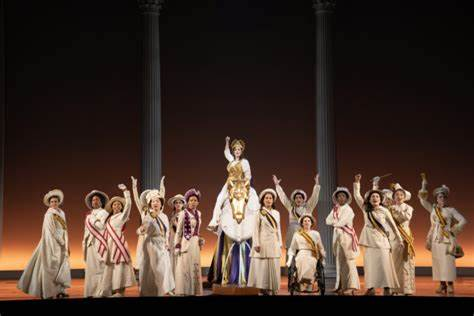
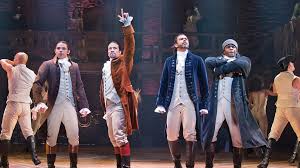
Suffs on Broadway approaches the representation of the women’s suffrage movement in an easily digestible, contemporary reimagining, similar to how Hamilton attempted to represent the American Revolution through the lens of the founding fathers. Arguably, Suffs reimagined its historical event better, because it directly confronts the exclusion of African American suffragists multiple times throughout the musical while still bringing attention to their contributions, and features cross-gender casting. A challenge that these historical representations in contemporary theater often encounter is their portrayal of minority figures—what constitutes as authentic and meaningful representation? In reimagining, there is a balance between creative liberty and the responsibility of maintaining historical accuracy. What really stuck out…
-
Finley Nguyen — Discussion Post 3
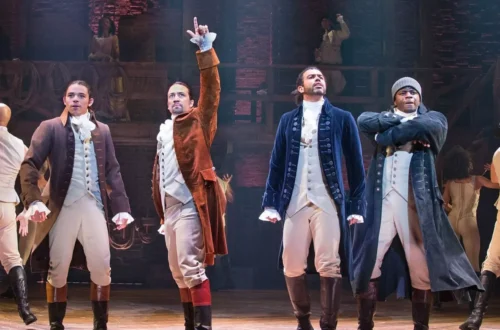
“In New York you can be a new man!” To me, this was the most awe inspiring lyric in the hit Broadway musical Hamilton. It’s a recurring motif, appearing throughout the tracks “Alexander Hamilton” and “Helpless.” And to be honest, I understand where they were coming from. New York turned me into a completely new man. The way Hamilton depicts its namesake, Alexander Hamilton, an orphaned, impoverished immigrant from the Caribbean who worked his way up the ladder makes him seem like a figure of empowerment for immigrants. This is the classic tale of someone who successfully achieved the American Dream and contributed to the founding of this nation, which…
-
Finley Nguyen — Discussion Post 2
Part 1: For this discussion post, I have chosen one of the photographs I took of an advertisement I saw on the High Line. While others may have glanced at it once or twice and walked past it afterwards, I took interest in this promotional poster because 1) Other than for events, there aren’t a lot of advertisements on the High Line where passersby can see them, and 2) This also contributes to the aesthetic landscape of the High Line. The design of the poster is carefully thought out to camouflage itself in the artistic environment of the High Line. It uses a nude color palette of beige, brown, and…
You May Also Like

Jayden Pooran’s Discussion Post 1
-
Finley Nguyen – Discussion Post 1
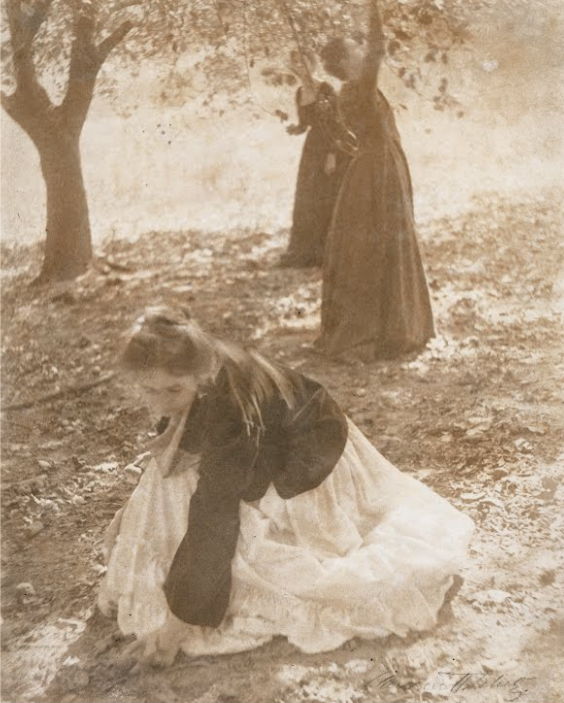
This photograph, titled, “The Orchard” by artist Clarence Hudson White, depicts three women in a field of leaves and small fruit who are fixated on their surroundings. A tree, outstretched in the background, extends its branches and offers its fruit to the two short haired women dressed in similar dark gowns. One woman reaches upwards, while the other behind her is caught in a moment of contemplation. The third woman in the image’s foreground, dressed in the darkest long-sleeved blouse and light linen skirt, has her long hair up in a ponytail. She sits and crouches over to pick a small, round fruit off the ground. The print itself is…