Kevin Joseph Discussion Post #2
Summary
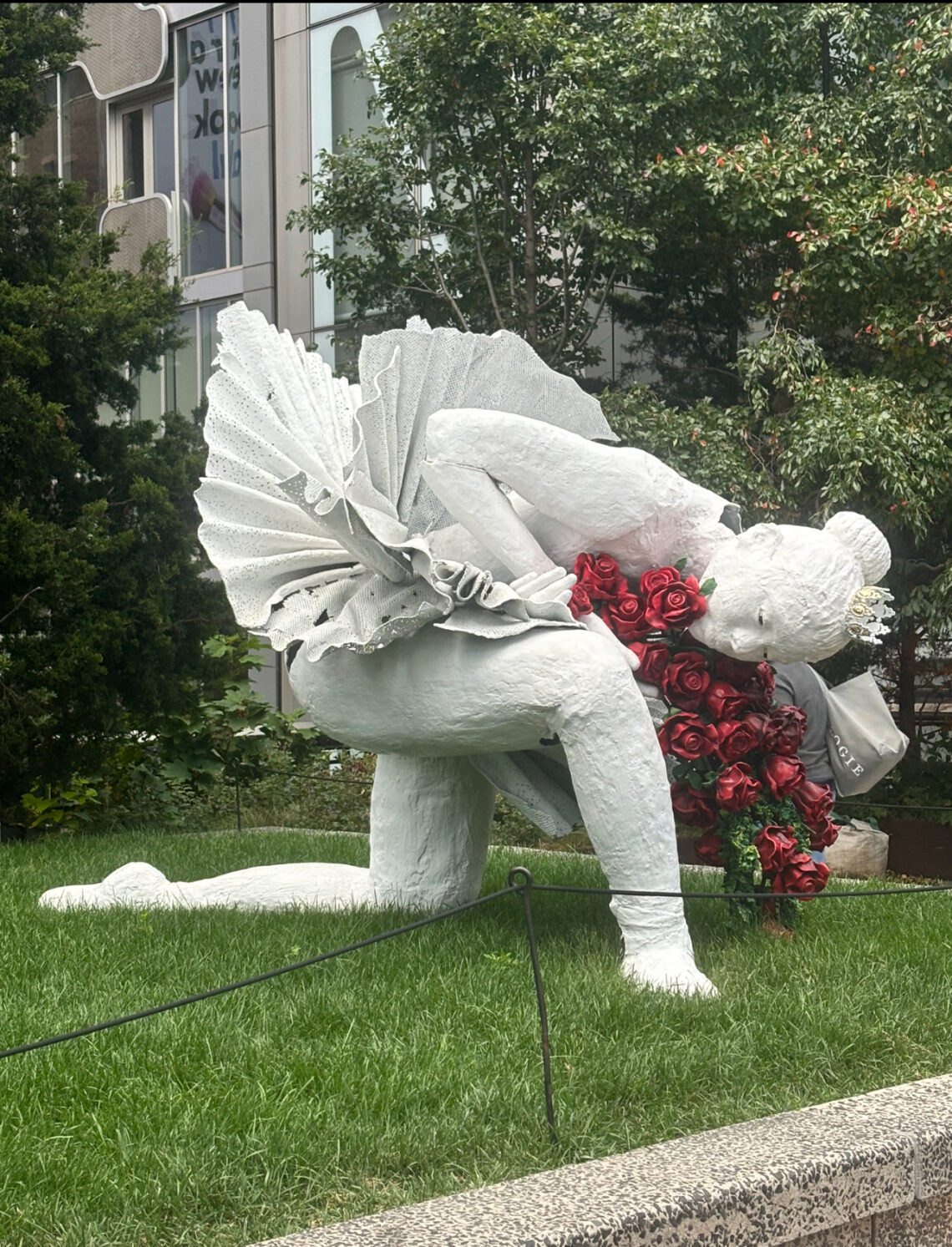
Part One: I will be discussing Curtain Call by Karon Davis. This magnificent, larger-than-life sculpture shows an African American ballet dancer taking her final bow after a completed performance of her ballet. Curtain Call is appropriate to the aesthetic in NYC and the High Line due to the fact that it aligns with the themes of cultural identity and performance. This knowledge that she is an African American ballerina invites the viewer to consider her accomplishments in ballet in an even more meaningful manner. Especially to many minorities, New York City is seen as the city of fulfilled dreams, while this ballerina does seem to emphasize this kind of "American Dream" and its completion. This sculpture caught my eye not only because of its enormous size but also because of the immense amount of detail Davis had used in her work. The dress of the ballerina consists of symmetrical waves, which is very realistic since any person bending down scrunches their clothes into wavy patterns, just as she has done in this sculpture. The whole sculpture is in plain white; however, her eyes are black, the crown shows a little yellowish-gold, and the roses are red. The use of gold in the crown suggests that this ballerina has in fact achieved the American Dream, as gold can be used to represent success and luxury. Typically, an individual is supposed to feel overjoyed after accomplishing something great; however, the black eyes of the ballerina draw the attention of the viewer to find a sorrowful face. The lips are pursed tight in an almost downward frown, and it is clear that she is not conveying positive emotions. This lends me to the understanding that, although this was a phenomenal feat, the artist is trying to get across that African American women have historically been underappreciated. Though depicted as solemn, the ballerina does come across as accepted as she holds many bright red roses, one of the more traditional gifts of appreciation from the fans. I find it very strategic to place this sculpture on the grass above the walkway to create some kind of illusion that she is on stage and that the viewers around her are her audience, looking up at her. Beyond the intricate detail and beauty of this sculpture, the point this analysis really makes is how important Curtain Call on the High Line really is, with all the societal obstacles facing minority women.
Part Two: The High Line stands for the transformation of an old railroad track into a beautifully designed urban park, featuring many remarkable works of art. Amanda Burden and our tour guide made a point of emphasizing how important public attractions such as the High Line are in enhancing the aesthetic experience available to visitors to New York City. Whereas most people think of NYC as a financial capital, with most of its space taken up by skyscrapers, one ought to take into consideration the visitors and residents that need places to be free and secure, like the High Line. Walking the High Line, I watched several business-suited people taking in the pathways with their families and colleagues alike and couldn't help but conclude that everyone needs just that little break from their worldly anxieties in order to revel in the beauty of this man-made creation. The High Line is, however, chief among examples of what can happen when urban development and public art come together, as the trail runs alongside the Hudson River, passing between buildings. On the way are a series of billboards and graffiti that add to an unparalleled artistic environment developed within this region. The NYC billboards and graffiti have provided an interacting aesthetic for visitors as they walk the High Line, taking in iconic views of the Empire State Building and the Statue of Liberty on their walk. Too many developers just build things that create direct economic activity and tend to skip over what's between buildings: the public spaces. Building public attractions like the High Line actually brings in more tourists, creating more economic activity overall. The High Line has become one of the most popular global destinations today and stands out as a great example of how public spaces could indeed provide an authentic NYC experience while people enjoy greenery and art.



